Positive Discipline Tools for Teachers by Nelson and Gfoerer is an important resource for redirecting teaching behaviors from the traditional punishment based system and towards a method that allows for the student to be an active participant in the process. Though I am not a teacher, I am a parent and often struggle with the "right" way to discipline my girls in a way that does not stifle their curiosity and encourages them to remain creative, while still taking responsibility for their actions and understanding consequences. This book is an excellent guide to just that and has opened my eyes to the possibilities and different approaches to looking at problematic behavior, if you want to call it that. The real take home message is that every child has his/her own way of navigating the world and they should be encouraged to embrace that rather than become victim to our "one size fits all" methodology. It also recognizes that a child's behavior is not one aspect to who they are and expands the focus to the emotional and social aspects of who they are and how discipline plays a role with those dynamics. In all, an interesting and worth while read.
Enforcing the corporate rules by day but breaking the parenting ones is my real full time job, or at least making my own up as I go is...
Showing posts with label every day life. Show all posts
Wednesday, December 20, 2017
Tuesday, July 11, 2017
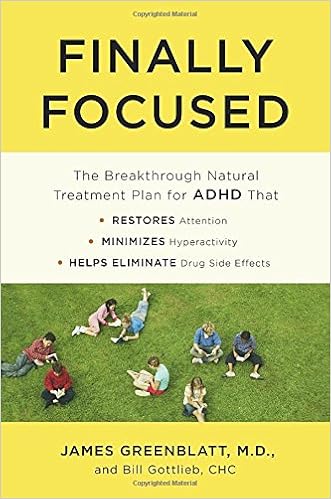
Blogging for Books: Finally Focused
Finally Focused is a guide about some of the factors that lead to ADD/ADHD behaviors and how natural remedies can help to manage those symptoms or the symptoms of medication. What I found most interesting about the book is the historical background about the syndrome. I had no idea that cases dated back to 1902, which, unsurprisingly, were thought to be a defect in moral character rather than biological/environmental. The most important aspect that the author focuses on is that ADD/ADHD is really a subset of behaviors that may have one or more cause, so there is no "one size fits all" solution. He uses his 30+ years of experience to outline cases that he has successfully treated.
Though I found the book to be an interesting read, I did not find the data that he provided to be sufficient enough to persuade me that his methods are sound. For someone who had over 30 years of experience treating cases, it felt like he offered only a few case studies and no large scale trends to further understand his treatments. I do think it is worth reading for someone to get more information and perspective or feels like they may have "tried everything" to help their child or themselves when managing the difficulties presented in ADD/ADHD.
Labels:
blogging for books,
books,
every day life,
parenting,
raising children,
reviews,
self_discovery
Thursday, June 29, 2017
Blogging for Books: In A Different Key
In A Different Key: The Story of Autism by John Donvan and Caren Zucker is a comprehensive history about autism. Using biographical narrative the book explores the struggles regarding defining, diagnosing and treating autism as well as what that meant for human rights for those individuals. The stories are touching and hit to the core of compassion and intrigue.
I highly recommend this book how knows or loves anyone on the autism spectrum as a means to not only understand the condition, but also to understand how far the movement has come and still needs to go.
Labels:
blogging for books,
books,
every day life,
life,
reflection,
reviews
Friday, March 31, 2017
Blogging for Books: The Acid Watcher Diet
The Acid Watcher Diet by Jonathan Aviv is a user friendly guide about the effects and treatment of acid reflux through diet modifications. The book starts by outlining what acid reflux is and the signs/symptoms to recognize that you have it as well as what the physical ramifications are of leaving it untreated. Aviv also discusses the different procedures that are available to confirm and diagnose it.
He then moves into the role of food in causing acid reflux and the different role of macronutrients in a balanced diet. He includes a handy chart for determining the different pHs of common foods and how they can be utilized to reduce inflammation in combination to the decisions that we make from day to day. This includes reducing particular behaviors that induce acid production, such as stress.
All of this information is followed by an easy to follow guide for a 28 day routine that is phased out into Healing and Maintenance as well as an exercise routine to support reaching a healthy weight as well as not aggravating the condition. The recipes included are easy to follow and most of the ingredients can be gathered at your average grocery store. This book is a good beginners guide or worth looking into for anyone battling acid reflux.
He then moves into the role of food in causing acid reflux and the different role of macronutrients in a balanced diet. He includes a handy chart for determining the different pHs of common foods and how they can be utilized to reduce inflammation in combination to the decisions that we make from day to day. This includes reducing particular behaviors that induce acid production, such as stress.
All of this information is followed by an easy to follow guide for a 28 day routine that is phased out into Healing and Maintenance as well as an exercise routine to support reaching a healthy weight as well as not aggravating the condition. The recipes included are easy to follow and most of the ingredients can be gathered at your average grocery store. This book is a good beginners guide or worth looking into for anyone battling acid reflux.
Labels:
adulting,
blogging for books,
books,
delicious,
every day life,
reviews,
tasty
Wednesday, March 8, 2017
It takes a village... but should it?
Every parent knows that parenting has its challenges and it is all about resources... from the others that we get our advice/recommendations from to the people that help us in caring/transporting our kids around, it is the supporting players that help make us successful.
But where are the lines drawn? When do the support start to over shadow our lead role? I know every parent goes through these different scenarios... the list of "banned" unhealthy snack items that comes from the school, the lengthy requirements from schools/daycares, or the standard that every decision be backed up by a professional (as if being a FT parent was not enough experience!)
Let me be clear, I understand why requirements exist: to keep kids safe and reduce liability for the caretakers (yes, the former is a priority, but the latter still exists). I also know why these things came into existence: more information became available regarding safer practices or their was a parent with bad behavior that caused the need for a policy. But I question again, when did these practices over shadow what we are trying to accomplish as parents to the point that our guidelines no long matter?
This all comes to light for me because my daughter got hit with the annual stomach bug that was going around. My facility does a really good job of managing the spread by keeping things cleaned and sanitized, but the spread of germs can only be contained so much. However, after a weekend of cleaning sheets and vomit off of every area in my house, we had made it to the end but her stomach was still sensitive. Because of this, we were keeping her on a bland diet to help keep her filled with nutrients and properly hydrated. This included swapping out the milk that she normally received a couple times a day with a dose of Pedialyte and water when she was thirsty. I had forgotten to mention this on Monday and when she got home from daycare her stomach was irritated again.
Realizing this, I sent a courtesy message to the daycare provider just asking that they swap out water for the week to let her stomach settle. Growing up, this was common practice in our house: chicken soup, dry toast and plenty of fluids...SIDENOTE: I know this isn't in medical journals, though I think there have been studies showing why this combination is effective ( I digress)... Anyways, not thinking this was an issue, I was not expecting the response to "get a doctor's note." Taken aback, the conversation turned to a back and forth regarding the difference between state mandated requirements and those that were implemented by the facility... needlesstosay, the conversation got us no where and she became more and more defensive as my questioning persisted to the point that she felt that I did not think their care was adequate (which is not the case, I only want to understand where these things come from so that I can... well, understand). When, in my reality, it is my job to question why my child is being cared for in a way that differs from my agenda and either adapt or move on.
SIDENOTE: I could post the whole conversation to show how crazy the exchange was, but I won't out of respect.
To some extent these situations are something that we have to expect when we outsource their care, but this seemed downright uncalled for because it should not act as a roadblock and close off the line of communication. The fact is that we still want the same thing: for my child to be cared for in the best way possible, but that may mean different things to each person involved. However, even with that being said, the parent has to have the upper hand at some point and our guidance valued more than just paying the bill on time... Aside from guidelines, I find that I am often not consulted regarding many other things about my child's care... whether her appearance (found that they had painted her nails when she was 6 months old) or the choice to give her candy (this one really bothers me because I personally feel candy under the age of 2-3 is not necessary and she 18 months).
My experience is obviously not the norm and I have great respect for those in the profession, but I feel like parents are being cut out more and more even though the means of communication have increased... but why? Is it because they truly know better or are we making ourselves more dispensable? It is a question I cannot answer and a place I don't want to be in, but, for now, I am backing up my decisions with notes from the doctor and moving on to a direction that better suits my parenting style.
But where are the lines drawn? When do the support start to over shadow our lead role? I know every parent goes through these different scenarios... the list of "banned" unhealthy snack items that comes from the school, the lengthy requirements from schools/daycares, or the standard that every decision be backed up by a professional (as if being a FT parent was not enough experience!)
Let me be clear, I understand why requirements exist: to keep kids safe and reduce liability for the caretakers (yes, the former is a priority, but the latter still exists). I also know why these things came into existence: more information became available regarding safer practices or their was a parent with bad behavior that caused the need for a policy. But I question again, when did these practices over shadow what we are trying to accomplish as parents to the point that our guidelines no long matter?
This all comes to light for me because my daughter got hit with the annual stomach bug that was going around. My facility does a really good job of managing the spread by keeping things cleaned and sanitized, but the spread of germs can only be contained so much. However, after a weekend of cleaning sheets and vomit off of every area in my house, we had made it to the end but her stomach was still sensitive. Because of this, we were keeping her on a bland diet to help keep her filled with nutrients and properly hydrated. This included swapping out the milk that she normally received a couple times a day with a dose of Pedialyte and water when she was thirsty. I had forgotten to mention this on Monday and when she got home from daycare her stomach was irritated again.
Realizing this, I sent a courtesy message to the daycare provider just asking that they swap out water for the week to let her stomach settle. Growing up, this was common practice in our house: chicken soup, dry toast and plenty of fluids...SIDENOTE: I know this isn't in medical journals, though I think there have been studies showing why this combination is effective ( I digress)... Anyways, not thinking this was an issue, I was not expecting the response to "get a doctor's note." Taken aback, the conversation turned to a back and forth regarding the difference between state mandated requirements and those that were implemented by the facility... needlesstosay, the conversation got us no where and she became more and more defensive as my questioning persisted to the point that she felt that I did not think their care was adequate (which is not the case, I only want to understand where these things come from so that I can... well, understand). When, in my reality, it is my job to question why my child is being cared for in a way that differs from my agenda and either adapt or move on.
SIDENOTE: I could post the whole conversation to show how crazy the exchange was, but I won't out of respect.
To some extent these situations are something that we have to expect when we outsource their care, but this seemed downright uncalled for because it should not act as a roadblock and close off the line of communication. The fact is that we still want the same thing: for my child to be cared for in the best way possible, but that may mean different things to each person involved. However, even with that being said, the parent has to have the upper hand at some point and our guidance valued more than just paying the bill on time... Aside from guidelines, I find that I am often not consulted regarding many other things about my child's care... whether her appearance (found that they had painted her nails when she was 6 months old) or the choice to give her candy (this one really bothers me because I personally feel candy under the age of 2-3 is not necessary and she 18 months).
My experience is obviously not the norm and I have great respect for those in the profession, but I feel like parents are being cut out more and more even though the means of communication have increased... but why? Is it because they truly know better or are we making ourselves more dispensable? It is a question I cannot answer and a place I don't want to be in, but, for now, I am backing up my decisions with notes from the doctor and moving on to a direction that better suits my parenting style.
Subscribe to:
Posts (Atom)